
Ordinary Speech Under Political Pressure
The Glass RoomThis flow traces how jokes, euphemisms, multilingual conversation, and official language shape what characters can say as danger grows.
increasing Bearing strength in each event
 decreasing
Bearing strength in each eventdecreasingTwo Languages at Home
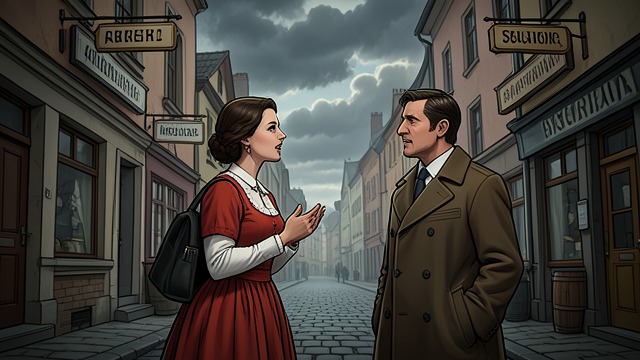
Speech Across a Divided City
German and Czech
The Landauers move between German and Czech in a city where different communities share streets and institutions. Liesel sometimes relies on Hana to mediate across languages and social circles.
The children are raised to use both languages with ease.
Speech as belonging
Language expresses intimacy and social position, but does not reliably identify a person’s politics or ancestry. The novel treats multilingual life as both a resource and a point of tension.
Hana’s Jokes and Secrets
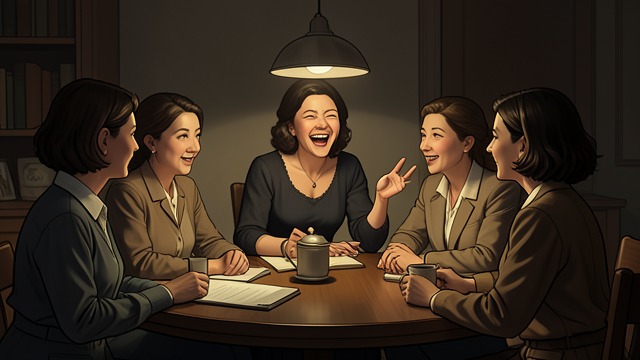
Humor Makes Space
Provocation
Hana uses jokes about sex, marriage, and convention to challenge the rules governing polite conversation. Her language makes private topics available for discussion.
The humor creates an atmosphere where women can speak more freely.
The limits of comedy
Jokes can also conceal grief or provoke hurt. Hana’s playful manner does not make her feelings simple or protect her from political violence.
Euphemism at the Border
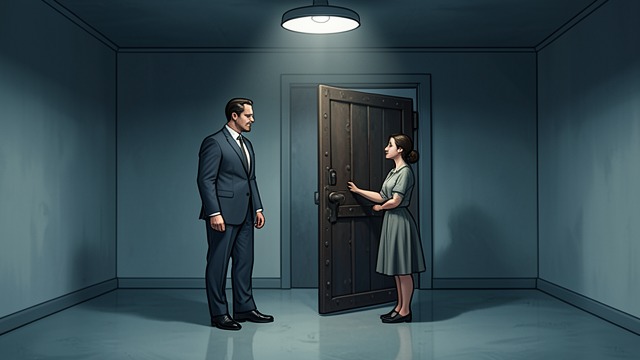
Official Language Hides Force
Procedure replaces explanation
Officials call Katalin and Marika’s detention a procedural issue, refusing to explain the decision in terms the family can challenge. The bland phrase hides the violence of separation.
Viktor’s insistence that the papers are valid is met by orders rather than discussion.
Words and power
The scene contrasts personal speech with administrative language. A polished phrase can make an arbitrary act appear routine.
A Country Called a Small Issue

Political Language Minimizes Lives
A distant quarrel
A radio speech calls the crisis a quarrel in a faraway country. Hana and the others hear their homeland reduced to a minor matter for distant powers.
The abstract phrasing contrasts with the lives that will be changed by the decision.
A phrase remembered
The words remain in the characters’ memory as a measure of abandonment. Public language becomes part of how private loss is later understood.
Names After the Return

Words Recover Connection
Names recalled
Marie and Ottilie recognize the childhood names that connect them to the Landauer household. Their exchange makes a former identity available again without erasing the adult lives they have led.
The names carry a language and history that have survived in fragments.
Translation remains incomplete
Throughout the novel, words cross Czech, German, and English but do not always carry the same meaning. Understanding requires listening to tone, context, and memory as well as vocabulary.
During the family’s early years in Město
During gatherings at the Landauer House
During the occupation and the Bayonne detention
During the Munich crisis radio address
During the 1990 reunion
